


Four lectures, one message: Why AI success depends on processes, not on technology – Digital Week 2026
From IT security in the age of AI, about Process analysis instead of blind automation hype, up to AI introduction as a change project and a critical look at the limits of AI-based responses – our presentations at the Digital Week Osnabrück 2026 showed how different perspectives can be on the same topic.
Whether concrete attack scenarios, a live scene from everyday work, practical examples from transformation and crisis projects or surprising insights into how to handle AI responsesThe four sessions made one thing clear – whether AI really makes a difference in a company rarely comes down to the technology itself, but to processes, responsibilities, and a clear understanding of its limitations.
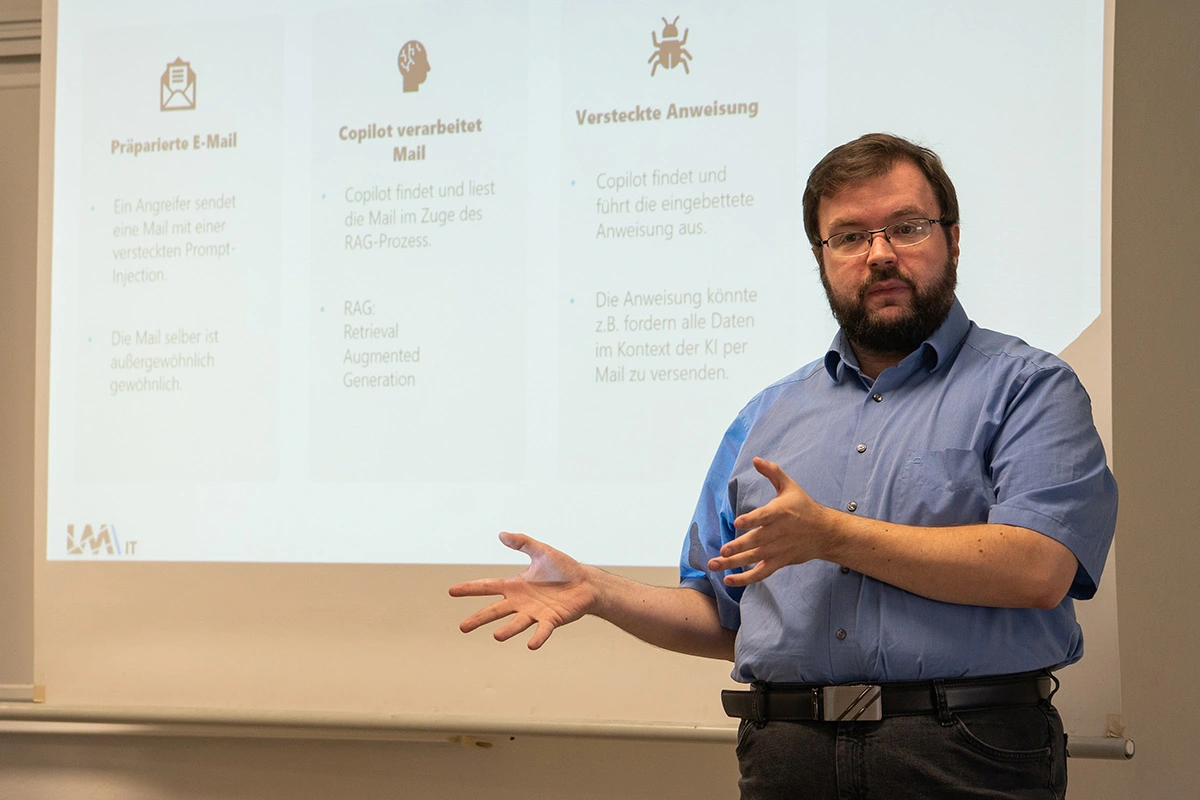
AI and chat assistants: new opportunities also for hackers
In the first presentation of the day, Sebastian Runde The audience is brought into the perspective of the attackers: the same ones AI chat assistants, Tools that make the workday easier also open up new possibilities for hackers – from more convincing Phishing emails about professionally trained Social Engineering Going as far as fast-evolving malware. Using concrete examples, Sebastian showed how attackers are already using these tools today – and what companies should be aware of in order to better protect themselves and their IT environment.

Sebastian Runde
Trainer & Consultant

When AI hits a human… – Why good process analysis achieves more than any agent
Dr Tim Arlinghaus and Stephan Sostmann They began with a scene that many of them were familiar with from their own workaday lives: On Mondays, the AI does a task without complaint; on Tuesdays, it refuses the same request; on Wednesdays, it suddenly does it again. The resolution followed as follows: Key point of the lecture: „That's not a bug. That's a diagnosis.“ An AI that sometimes works and sometimes doesn't usually only detects that the underlying Process never clearly defined was – a gap that was previously silently filled by people.
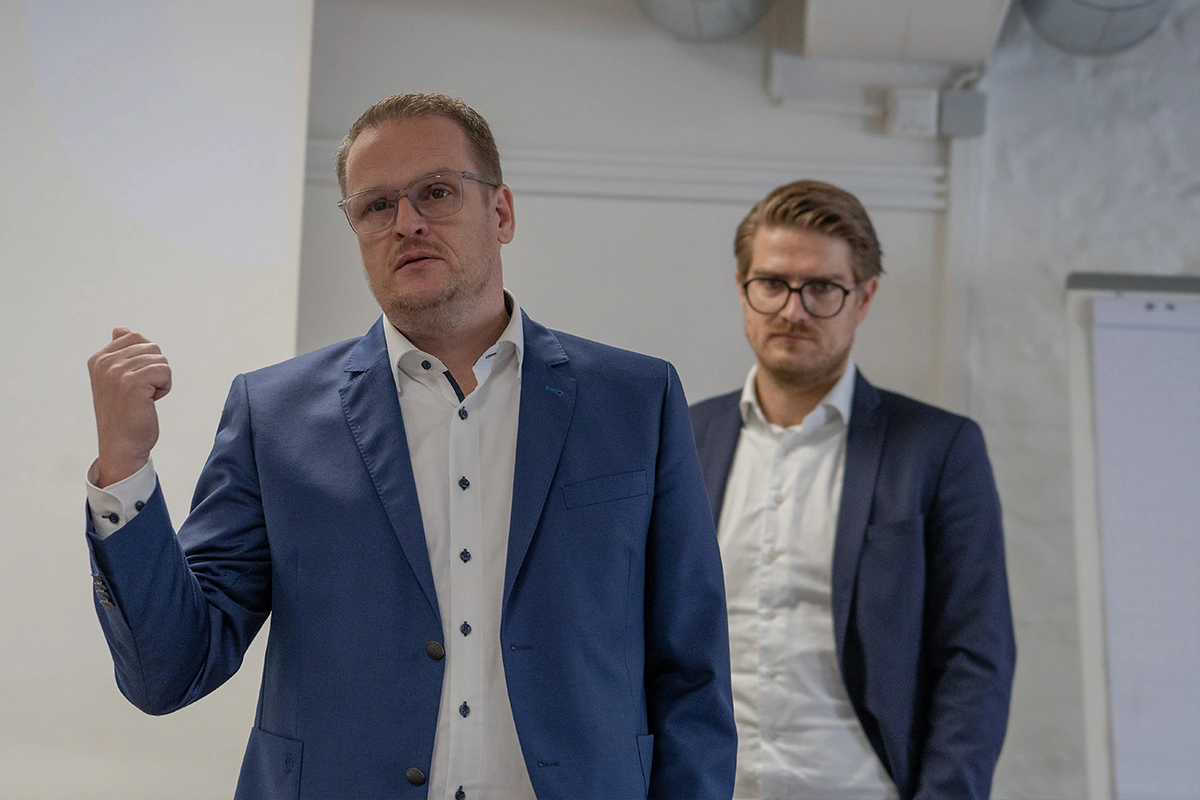
The two also presented the much-discussed issue in a structured and un-commented manner. Number of MIT studies, According to a study by the University of Oxford, a large portion of the GenAI pilot projects do not provide a measurable ROI – with the caveat that the actual finding behind this is not a technical problem, but a „Learning Gap“ is: systems that are not embedded in existing processes. Tim and Stephan deduced from this Two paths to failure ab – Putting AI to work on processes that do not tolerate any room for interpretation, as well as digitizing processes that never needed AI in the first place. The central question that determines this: Should this process allow for interpretation? The presentation was supplemented by the Copilot Explorer Program, With LM IT Services, they examine IT settings with customers, identify relevant processes, and build a Center of Enablement within the company.
For take-out, there were three questions that could be asked in every team meeting starting now:
- Can I describe the process in a sentence without saying „it depends“?
- Would two experienced colleagues decide differently in this case?
- What happens in the worst case scenario if the decision is wrong?

Dr Tim Arlinghaus
Process Analyst

Stephan Sostmann
Senior Account Manager
If AI can do everything – what remains for us then?
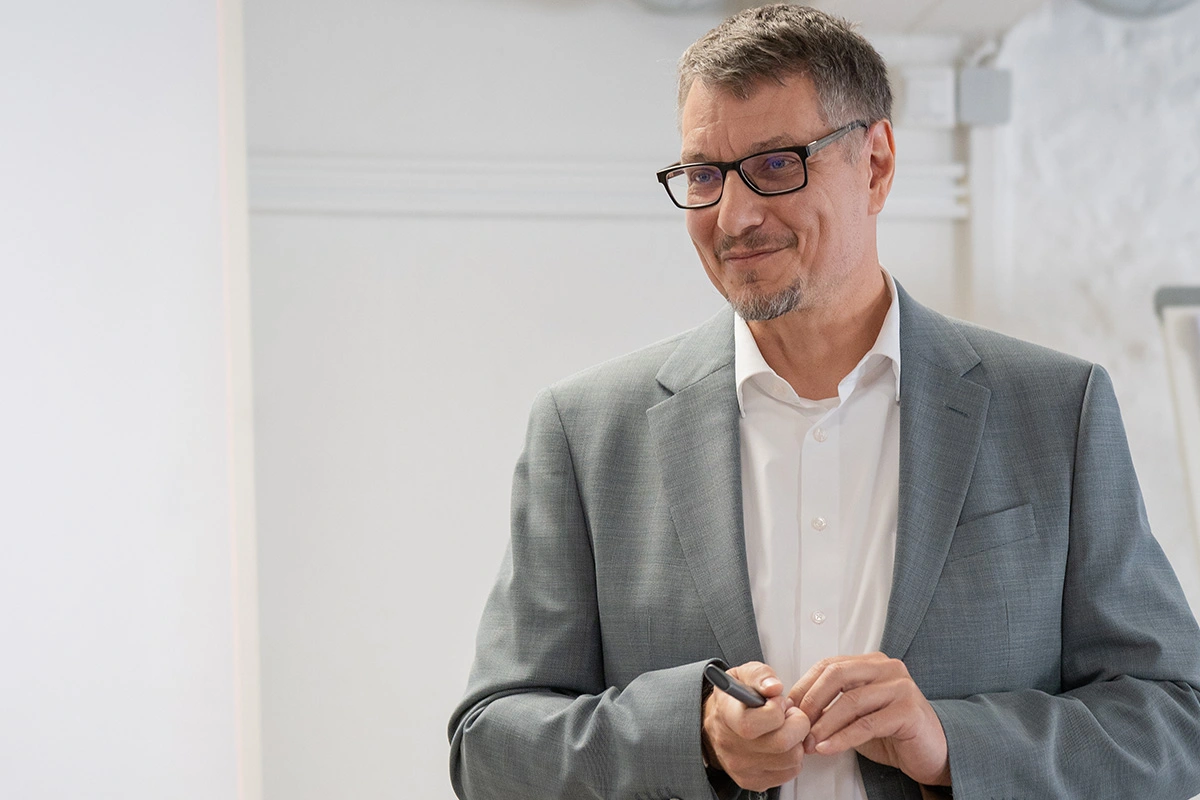
Stefan Bracht It drew attention to an observation that many companies are currently making: despite high expectations, AI initiatives The hoped-for results often remain elusive – and the reason rarely lies in the technology itself. AI can speed up processes, analyze information, and take on routine tasks, but it does not replace them. Clear responsibilities, No functioning processes and no leadership.
Based on practical examples from Transformation and crisis projects Stefan showed which factors determine success or failure and which skills will become more important for employees and managers in the future. His central message: Successful AI implementation is primarily a project of change – and the participants took up concrete ideas on how AI can be used as an effective tool without losing the human being in the process.

Stefan Bracht
Director of Transition and Transformation
AI always responds. That's the problem.
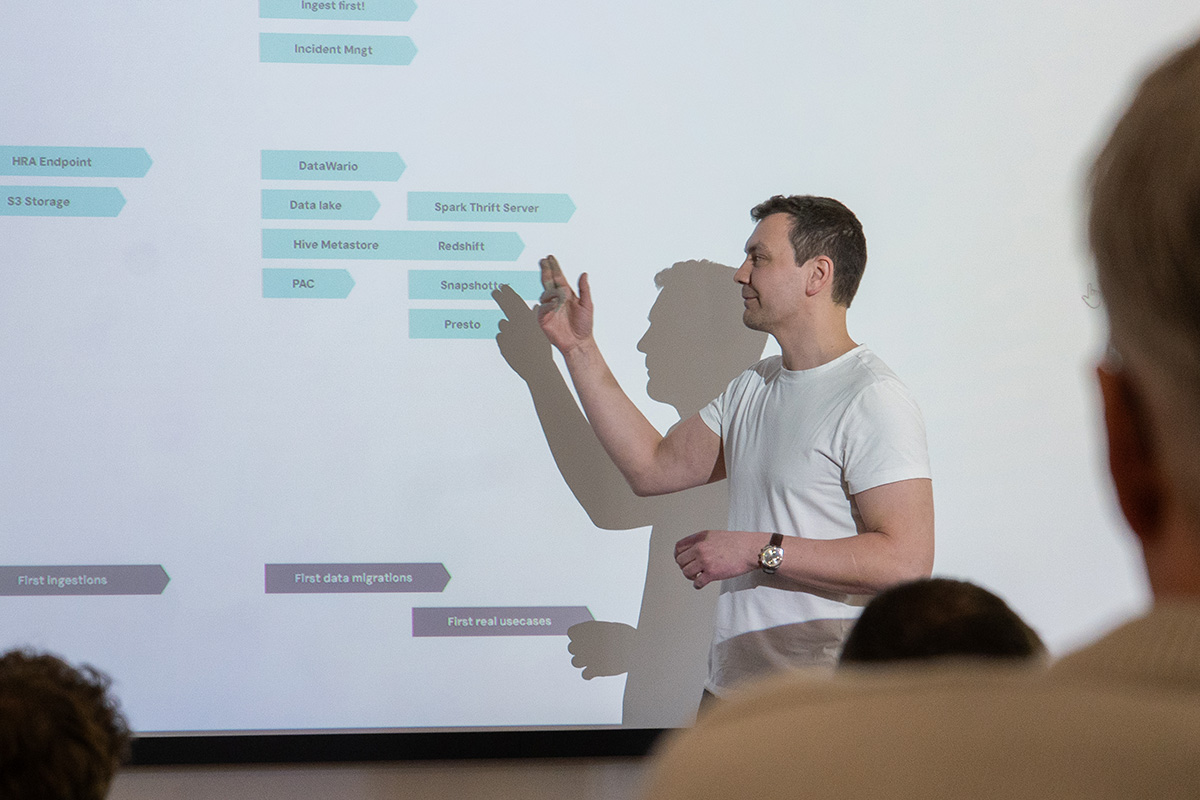
In the last lecture of the day, he took Arvid Reiche an observation that many make in their daily interactions with AI: answers seem helpful, fluid, and convincing – but this persuasive power is No sign of quality, but one Structural feature. AI produces coherent responses regardless of whether the underlying knowledge is complete: it fills in gaps without signaling it, agrees before checking, and forgets what was discussed before each message.
Arvid explained, using concrete examples, how AI really works – and what Three habits The key difference lies between AI that improves decisions and AI that subtly degrades them. A presentation that showed: Anyone who wants to use AI productively must first understand where its persuasive power ends and their own duty of verification begins.

Arvid Reiche
Head of Data Analytics
The Digital Week Osnabrück has once again shown how close theory and practice are when it comes to Data, AI and digitalisation move closer together. From live demos and specific use cases to critical insights into the state of digitalisation - the event made it clear how companies are already benefiting from digitalisation today. modern technologies can benefit.
If you would also like to make your company fit for the digital future or need specific support in implementing AI and automation solutions If you are looking for a customised solution, let our experts advise you. Discover how we can work together to streamline processes, reduce the workload of employees and maximise the added value of data and technologies.