





Change and Process Management
Digital transformation and new market demands require continuous adaptation from companies. For new processes and technologies to be successful in the long term, the human and organisational factors must not be overlooked. We support you in planning complex changes in a structured manner, optimising inefficient processes, and actively involving your employees in this journey. Shape the change actively.

Sustainable change for processes and people
Successful transformations require more than just the introduction of new IT systems. If processes are not lived and employees are not involved, the potential of expensive investments dissipates. We support your company holistically in organisational and technological changes.
Through targeted analyses, we identify optimisation potential and adapt outdated structures to new requirements. With transparent communication strategies and focused change management, we create high acceptance among your employees. In this way, we ensure that new ways of working are implemented and sustainably anchored.
Why many transformation projects fail in everyday life
Often, investment is made solely in technology, while the human factor is ignored. This leads to a lack of acceptance and inefficient use.

Lack of acceptance in the team
„We've introduced a new system, but employees are hardly using it and are continuing to work in old patterns.“

Inefficient, rigid processes
„Our processes no longer fit the new tools. Unfortunately, the hoped-for time savings are completely absent in everyday project work.“

Unclear communication
„Nobody knows exactly why we are changing the processes. The uncertainty within the team is massively slowing down the entire project.“
We combine process understanding with deep change expertise. We take your employees along, optimise processes holistically and ensure that your Investments pay off sustainably through new ways of working..

High acceptance among employees
Efficient and sustainable business processes
Clear and targeted communication

Sustainable anchoring of new ways of working
Our approach
Holistic and structured: In 5 steps to successful transformation
Understand & Analyse

Strategy & Design

Implementation & Support
Sustainable anchoring
Evaluation & Optimisation
Analysis of the initial situation and existing processes
At the start of every transformation project lies a deep understanding of your current situation. We analyse your existing business processes, identify technological hurdles and assess the company culture. Through interviews and workshops, we determine precisely where the biggest challenges lie and what needs your employees have. This detailed assessment forms the foundation for a realistic, tailor-made change strategy that tackles exactly where it offers genuine added value.

Development of target images and change measures
Based on the analysis results, we will jointly develop a clear target vision. We will define future-proof target processes and develop a holistic change management strategy. This also includes transparent communication planning that focuses on the benefits of the change for each individual. We will set binding milestones and concrete measures to make the journey from the old to the new world of work understandable and motivating for all involved.
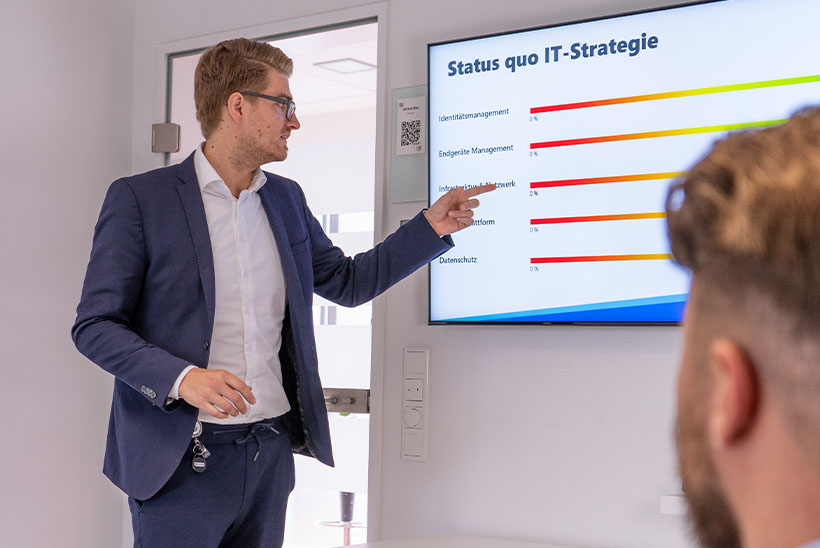
Active support during the implementation phase
We actively support you during the critical implementation phase. We accompany the rollout of new technologies and the transition of processes. In doing so, we support leaders in their roles as role models and multipliers. Through targeted coaching, practical training, and continuous communication, we overcome reservations. We ensure that uncertainties are addressed immediately and that the entire team actively participates in the implementation with motivation.

Establishing the new processes in everyday life
Changes are only successful when they become the new normal. We ensure that new processes and systems remain firmly embedded in the company's day-to-day operations long-term. By establishing key users and ongoing support structures, we prevent a relapse into old working patterns. The new roles and responsibilities become second nature, allowing your company to benefit from increased efficiency and agility permanently.
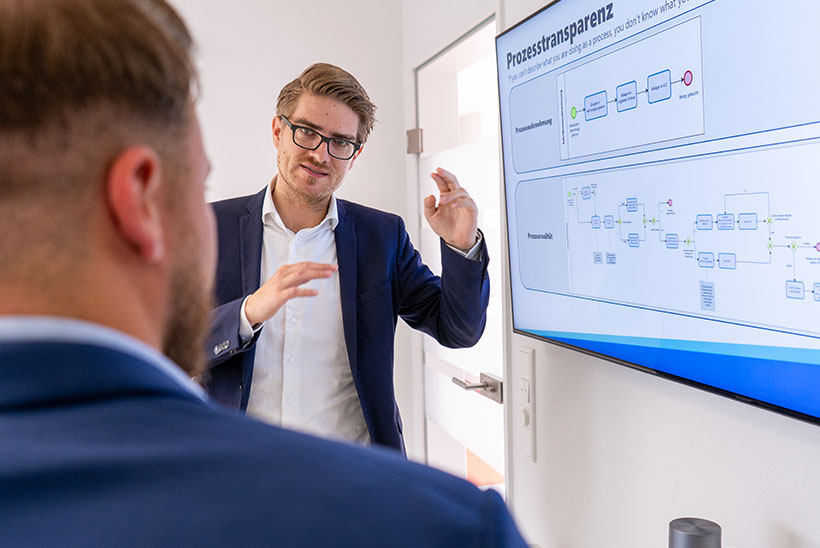
Measuring success and continuous adaptation
Following the anchoring, we will check the success of the measures. We will measure team acceptance, analyse the performance of the new processes, and compare the results with the defined objectives. Through this structured feedback, we will identify further optimisation needs. This allows processes to be iteratively adjusted even after project completion, and your company's innovative strength can be continuously maintained at a consistently high level.
LM IT Services AG in figures
Your reliable and high-performance partner

1994
Foundation and starting signal for over 30 years of success for LM IT Services AG

More than 1,500
Satisfied customers at home and abroad

More than 500,000
Project and training days completed for our satisfied customers

More than 80
Projects for the development of customised software

Over 75
Engagements in managed services project support
We are a multiple award-winning Microsoft Solutions Partner


Ready for change and process management? Contact our team!
No time for emails?
Book your free 30-minute appointment directly in the calendar of our team of experts!
Ralf Minning
Chief Commercial Officer
The most important answers to your questions about our change and process management offering:
Change Management refers to the structured approach to managing the transition or transformation of an organisation's goals, processes, or technologies. The purpose of Change Management is to implement changes in a way that minimises resistance and maximises the benefits of the change.
Change Management encompasses the structured planning, support, and sustainable embedding of changes within an organisation. The goal is to successfully introduce new processes, technologies, or ways of working by actively involving employees in the transition and mitigating potential resistance through transparent communication.
Why is Change Management so important?
Technical solutions and new processes alone are often not enough to create real added value. Only when employees understand the benefits of changes, accept them, and apply them in their daily work can projects unfold their full economic and strategic potential for the company.
What is the difference to process automation?
Process management conceptually analyses and optimises existing business processes. Process automation is a subsequent step that specifically uses technologies (such as Microsoft Power Platform) to execute the previously optimised processes more efficiently, with fewer errors, and in some cases, fully automated by software.
Change management should start in projects at the very beginning.
Ideally, change management should be integrated right from the start of a transformation project. This allows changes to be planned early on, leaders to be trained, and employees to be involved through communication from the outset, which effectively minimises later resistance during the rollout phase.
Which projects is the service suitable for?
Our change and process management expertise is ideally suited for extensive digitalisation projects, complex cloud implementations, modern workplace initiatives, far-reaching organisational changes, post-merger integrations, and general process optimisations that have a significant impact on the daily work of the workforce.
How long does a classic change process take?
The duration varies greatly depending on the scope of the change and the company culture. While minor process adjustments can be embedded in a few months, profound technological or cultural transformations often require structured support over one to two years to have a truly sustainable impact.
How is the success of changes measured?
Success can be measured by qualitative and quantitative KPIs. These include an increased adoption rate of new software tools, faster process cycle times, a reduced error rate, and regular employee surveys that transparently reflect feedback and acceptance of the new ways of working.
What happens if Change Management is ignored?
Without professional change management, projects often fail due to a lack of user acceptance. New systems are boycotted, inefficient workarounds emerge, and the IT budget is lost. Furthermore, frustration within the team increases, which can significantly strain productivity and the general work environment in the long term.