






Delimitation and workflow in Microsoft Fabric
The terms data engineering, data analytics and data science are closely linked, but refer to different aspects of data processing. A clear separation between the disciplines is not defined. The specialist areas draw on the expertise of others from time to time.
In Microsoft Fabric, these terms are assigned to different areas of the software. In order to make a possible distinction, we differentiate between the terms. Here we look at the application of the disciplines within a data-related project.
About the author

Niels Völger
Data Engineer
About the author
Niels Völger
Data Engineer
Delimitation and workflow in Microsoft Fabric
The terms data engineering, data analytics and data science are closely linked, but refer to different aspects of data processing. A clear separation between the disciplines is not defined. The specialist areas draw on the expertise of others from time to time.
In Microsoft Fabric, these terms are assigned to different areas of the software. In order to make a possible distinction, we differentiate between the terms. Here we look at the application of the disciplines within a data-related project.

Data Engineering
- Data Engineering refers to the process data aggregation, storage and processing.
- Data Engineers design, develop, test and maintain systems for data processing and ensure that data can be efficiently collected and stored in different formats and from different sources.
- The main objective of data engineering is to create a robust and scalable infrastructure for data processing.

Data analytics
- Data analytics concentrates on the Analysis of datato gain insights and patterns.
- Data analysts use various statistical methods and tools to analyse data, identify trends and support business decisions.
- The focus is on uncovering interdependencies or similar patterns in the data. These findings can be used to derive recommendations for action from the data.

Data Science
- Data Science is an interdisciplinary approach that combines different Techniques and methods from mathematics, statistics, computer science and domain knowledge combined.
- Data scientists use advanced analysis techniques such as machine learning models to solve complex problems and make predictions for the future.
- In contrast to data analytics, data scientists require extensive experience in software development in order to apply the above-mentioned techniques.
Agile composition of data teams
The composition of a data team should be tailored to the requirements of the specific use case. Depending on the project, it may be necessary to place more emphasis on data engineering, data analytics or data science. A flexible approach makes it possible to determine the required competences on an ad-hoc basis in order to meet the specific challenges of a project. The requirements of the use case play a decisive role in determining the focus and selecting suitable team members.
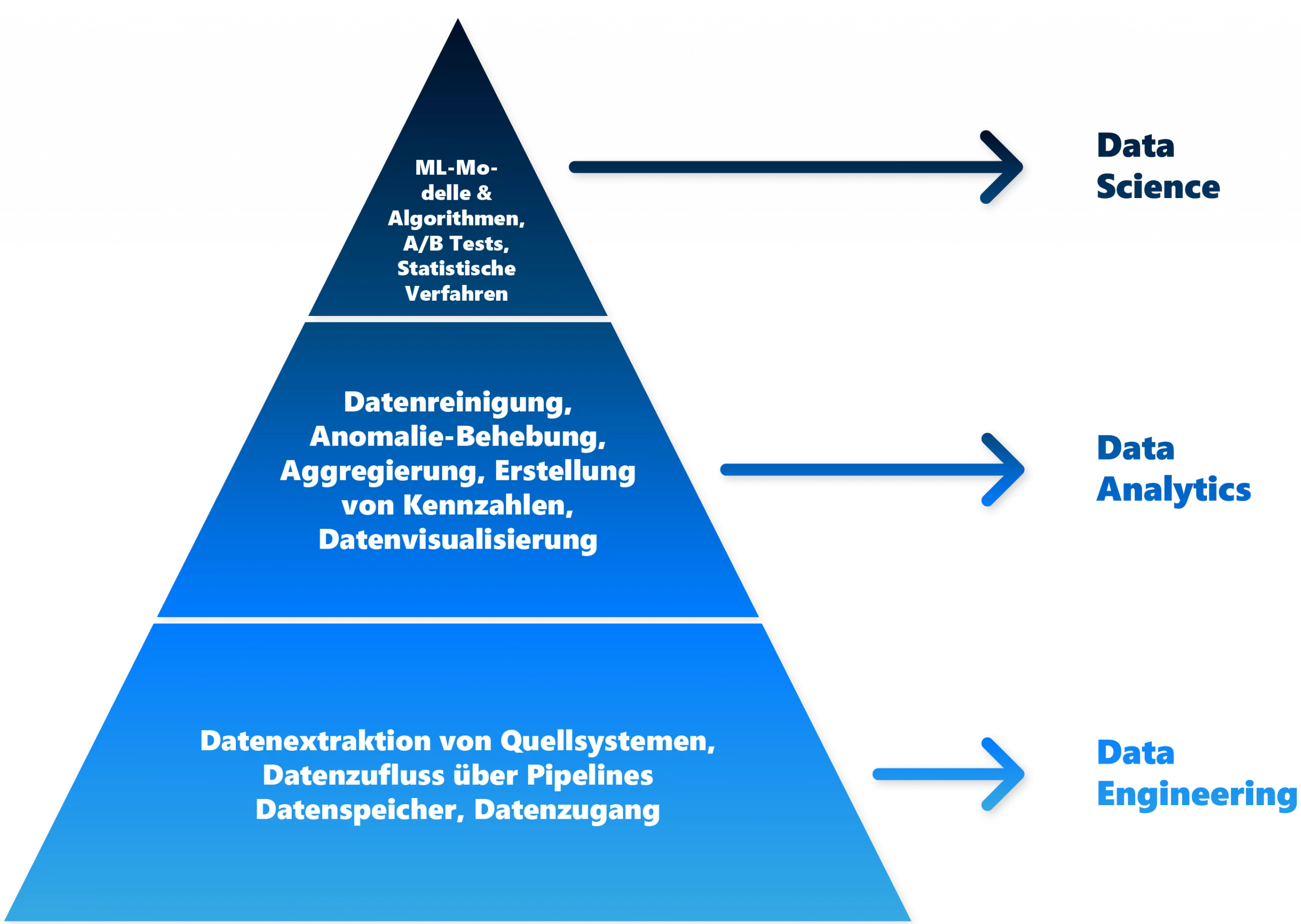
Source graphic: https://jelvix.com/blog/data-engineers-vs-data-scientists
Source graphic: https://jelvix.com/blog/data-engineers-vs-data-scientists
Do you have any questions?
Are you also interested in getting to know Fabric and using all its functions extensively? I will be happy to help you with any questions you may have about Microsoft Fabrics and data analytics.